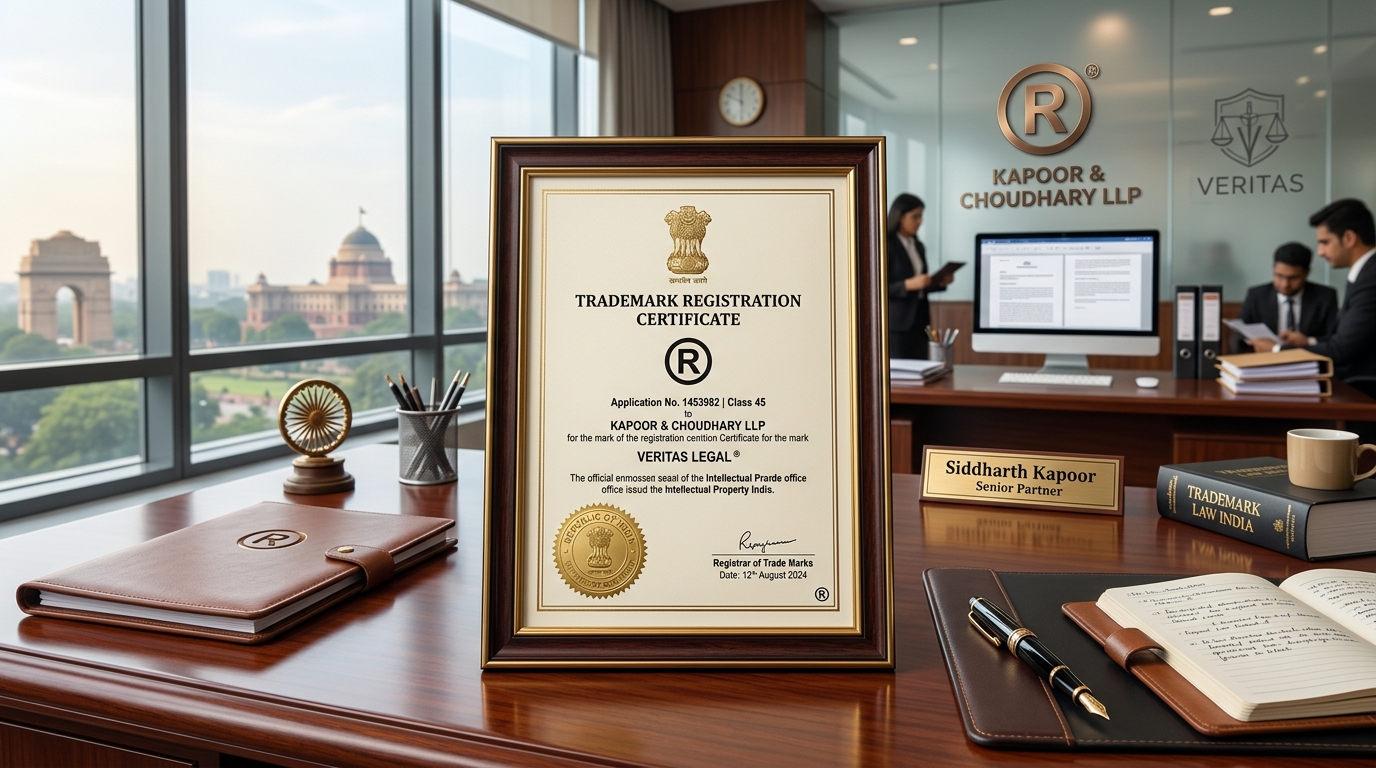
Your Brand Name is Your Most Valuable Asset
You spend months building a memorable brand name, acquiring domain names, and designing visual identities. But without statutory registration under the Trade Marks Act, 1999, you hold virtually zero legal monopoly over that brand in India. Competitors can launch confusingly similar names or, worse, register your trademark and legally force you to rebrand.
1. TM Symbol vs ® Symbol: The Legal Distinction
Understanding the statutory distinction between trademark markers is essential for every business founder:
Can be used immediately upon filing Form TM-A with the Trade Marks Registry. The ™ indicates to the market that an application has been submitted and ownership is claimed. It acts as a public deterrent against counterfeiters.
Can only be used after the Registrar of Trade Marks issues the final Trademark Registration Certificate. Using the ® symbol before formal registration is a criminal offense under Section 107 of the Trade Marks Act, punishable with fine and imprisonment.
2. Understanding the 45 NICE Trademark Classes
India follows the internationally recognized NICE Classification consisting of 45 distinct classes. Classes 1 to 34 cover tangible goods, while Classes 35 to 45 cover services:
| Popular Startup Classes | Industry / Business Profile Covered |
|---|---|
| Class 9 (Goods) | Mobile applications, downloadable software, AI models, electronics, SaaS algorithms |
| Class 35 (Services) | E-commerce marketplaces, digital marketing, corporate management, retail outlets |
| Class 42 (Services) | Software as a Service (SaaS), cloud hosting, web development, tech consulting |
| Class 36 (Services) | Fintech, banking, insurance, real estate management, payment gateways |
| Class 41 (Services) | EdTech, educational institutions, training programs, digital media publishing |
| Class 43 (Services) | Restaurants, cloud kitchens, hotels, food delivery establishments |
| Class 25 (Goods) | Apparel, footwear, fashion brands, clothing accessories |
3. How to Conduct a Trademark Public Search on IP India
Before filing an application, conducting an exhaustive search on the official Controller General of Patents, Designs and Trade Marks (CGPDTM) portal (ipindia.gov.in) is mandatory:
- Select Search Type: Wordmark, Phonetic, or Device/Logo.
- Input the proposed brand name with wildcards (e.g.,
Acme%). - Enter the relevant NICE Class code.
- Review all conflicting results across three statuses: Registered, Objected, and Pending Examination.
- Run a phonetic search to identify names that sound identical even if spelled differently (e.g., Phonix vs Phoenix).
4. Step-by-Step Trademark Registration Workflow
Filing Form TM-A
File online via IP India portal. Receive immediate application number and official timestamp. Begin using the ™ symbol immediately.
Examination Report
Trademark examiner reviews application within 30–60 days for Section 9 (distinctiveness) and Section 11 (similarity) objections.
Journal Publication
Upon passing examination, the mark is published in the official Trade Marks Journal for a 4-month statutory opposition period.
Registration Certificate
If no opposition is filed, the Registrar issues the Certificate of Registration. Valid for 10 years and renewable indefinitely.
5. 50% Government Fee Subsidy for Startups & MSMEs
To foster entrepreneurship, the Ministry of Commerce & Industry provides a 50% statutory fee concession:
- Standard Corporate Fee: ₹9,000 per class for large companies.
- Subsidized Fee for Individuals, Startups (DPIIT) & MSMEs (Udyam): Only ₹4,500 per class!
By possessing a valid MSME Udyam Certificate or Startup India recognition, you save ₹4,500 in government filing fees on every single trademark class application.
6. Frequently Asked Questions (FAQs)
Secure Your Brand Monopoly Today with Webmittar
Free phonetic trademark search, 50% MSME fee discount, and complete objection reply filing.
Start Trademark Registration Online